How to Play Sovereign Tower
Audiences, exploration, and Round Table assignments in one daily loop
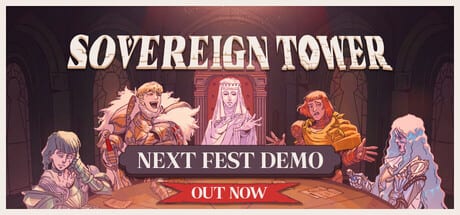
Sovereign Tower asks you to rule a magical tower through patience, delegation, and political instinct — not action-combat reflexes. Wild Wits’ Round Table management RPG, published by Curve Games, launched solo on PC Steam August 6, 2026 for Windows and SteamOS (Linux) — available now with Steam Deck Verified support. The downloadable demo covers Act 0 and Act 1, which is enough time to learn the full daily rhythm that the rest of the wiki builds on.
This guide explains that rhythm without spoiling secret knights or Demon rewind puzzles. When you are comfortable here, continue to Knight Stats, Factions, and the Round Table system.
What you are trying to do
You are the sovereign of a tower caught between factions, treasury pressure, and supernatural oddities. Each in-game day, you:
- Hold morning audience with subjects and faction representatives.
- Explore the tower — annexes, crypts, corridors with secrets.
- Convene the Round Table and assign knights to quests.
Quest outcomes change resource meters, unlock story scenes, and determine whether tomorrow’s audience is calm or hostile. Fail too often and you will meet the Demon in the crypts, who offers time rewinds — covered later in Time Rewind Explained.
Phase 1: Morning audience
Audiences happen at the start of the day. Subjects arrive with petitions, rumors, trade proposals, and warnings. Treat this phase as intelligence gathering, not busywork.
What to watch for:
- Faction mood hints — Nobles, Merchants, Mystics, Scholars, and People each telegraph happiness or anger. The Factions Guide explains long-term consequences.
- Quest previews — some NPCs mention tomorrow’s Round Table cards before they appear.
- Intendant threads — the Intendant collects secrets; polite probing here unlocks later dialogue flags without spending knight assignments.
- Treasury signals — gold shortages restrict annex upgrades documented on Annexes and Crafting.
You cannot solve every petition immediately. Note who you snubbed; they remember.
Phase 2: Tower exploration
After audience, you walk the tower. Exploration is where management games often hide their soul — Sovereign Tower included.
Typical exploration rewards:
- Annex access — forge, alchemy, and other wings tied to the Lady of the Tower.
- Recruitment cues — standard knights and optional characters; see Recruit Knights.
- Crypt paths — eventually leading to the Demon and rewind mechanics.
- Crafting inputs — resources that boost knight effectiveness indirectly through gear and consumables.
Exploration time is finite each day. Prioritize annex unlocks that match your failing quest stat — if Wit quests wreck you, Scholar wing interactions matter more than cosmetic corridors.
Phase 3: Round Table assignments
Evenings belong to the Round Table. Quest cards list stat requirements (Strength, Agility, Charisma, Magic, Wit), risk level, payout, and faction tags. Assign knights like Angelica, Gwendan, Ursula, Gideon, and Goberto from your Roster.
Assignment checklist:
- Read every requirement line, not just the biggest number.
- Compare knights using Knight Stats knowledge or the Quest Matcher.
- Consider faction impact — a successful quest that enrages Mystics may not be worth it.
- Leave flex capacity if you expect a chained quest tomorrow.
- Accept that failure is story — not always a reload moment in demo design.
Deep mechanics live on the Round Table system page. Quest Success Tips covers risk management once failures sting.
Knights and stats in one paragraph
Knights are not cosmetic. Each carries stat lines that map directly to quest checks. Some community notes mention Luck, but plan around the five confirmed stats first. Secret recruits — Dulahan, Chester, Sparky, Rufus, Silgur, Brunhilda — extend coverage but require spoiler routes on Secret Knights.
Factions and treasury: invisible difficulty knobs
Even perfect knight assignments fail politically if factions revolt. Merchants care about trade; Mystics about arcane respect; Scholars about truth; Nobles about hierarchy; People about fairness. Treasury sits alongside them as the resource that funds annex growth.
Audience tone + quest tags + recent history determine whether a +3 Charisma quest is easy or a trap. Track trends with the Faction Balance Tracker when numbers blur together.
Demo scope and full release
The demo teaches the loop; the full game continues the campaign with later acts, expanded annex tiers, and rival rulers. Solo only — no multiplayer. For version differences, read Release, Demo & Availability.
First-week starter plan
Days 1–3: Focus on audiences and learn names. Send balanced knights on low-risk quests. Open annex paths the Lady mentions.
Days 4–7: Identify your weakest stat on failure logs. Bench no one permanently until you read the Tier List.
After first major failure: Consider whether you want organic recovery or Demon rewind learning — Time Rewind when curious.
Before beast content: Decide if you want spoiler guides like Beat the Dragon Knight open.
Common beginner mistakes
- Skipping exploration to spam quests — you miss recruits and crafting.
- Assigning purely by highest single stat — mixed cards punish this daily.
- Ignoring audience warnings — factions surprise you at the worst quest timing.
- Chasing secret knights before understanding rewinds — frustration, not fun.
- Treating the game like a roguelike reload simulator — narrative consequences persist until Demon intervention.
Where to go next
- Recruit Knights — expand the Round Table roster deliberately.
- Knight Stats — read cards like a veteran.
- Demo Walkthrough — sequential story if reference docs feel cold.
- Knights Hub — roster, tiers, secrets in one index.
Sovereign Tower rewards observant rulers. Learn the three-phase day until it feels like breathing — then let deeper guides complicate your perfect plan.
Frequently Asked Questions
Quick answers to the most common questions.
What is the daily loop in Sovereign Tower?
Each day has three phases: morning audience with subjects, tower exploration, and Round Table knight assignments. Outcomes feed the next day's politics and quests.
Is Sovereign Tower turn-based combat?
No. It is a narrative management RPG focused on delegation, stats, and faction balance — not action combat. Knight power expresses through quest success rolls and story outcomes.
How long is the demo?
The demo covers Act 0 and Act 1 — enough to learn core systems and meet key knights. See [Release, Demo & Availability](/review/release-demo/) for current store details.
What should I do after my first quest failure?
Read the failure report for faction and stat hints, adjust using [Quest Success Tips](/guides/quest-success/), and explore annex upgrades before you restart obsessively.
Can I pause between phases?
The demo follows a structured day flow without real-time pressure between phases. Take your time in audience and exploration before confirming Round Table assignments.